
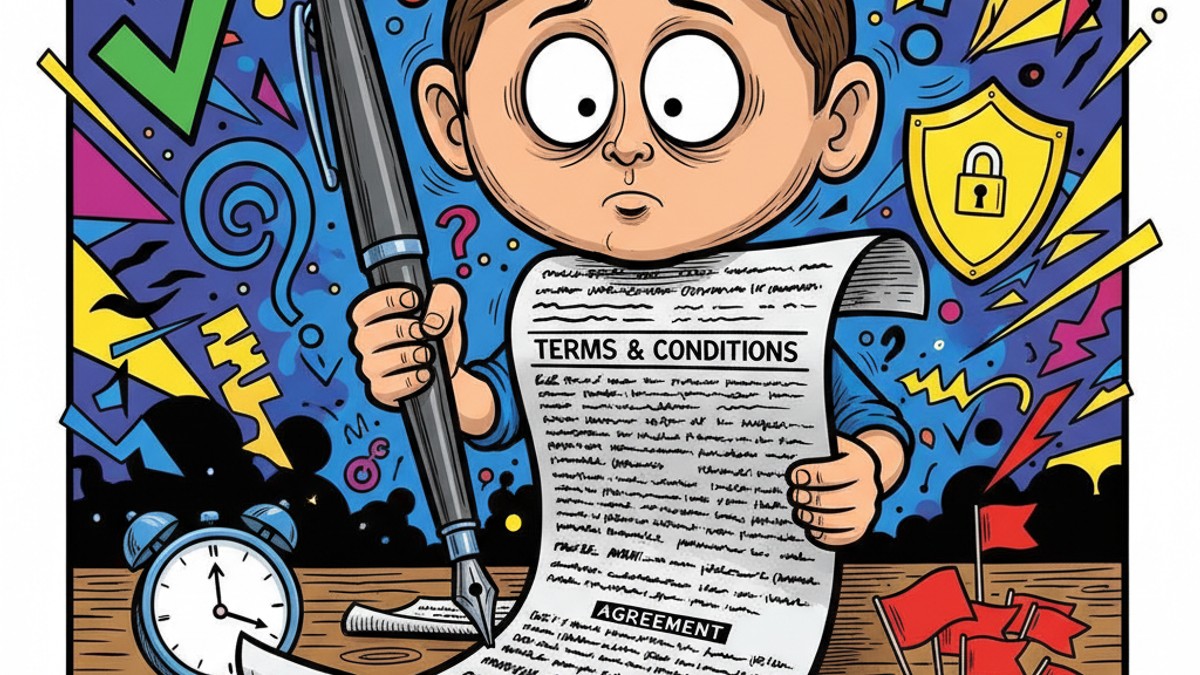
First job. Exciting, stressful, and — let’s be honest — a little intimidating. You get handed a contract, a pile of papers, and your boss says “just sign here somewhere”… And you sign. Because who has time to read the fine print?
Well, dear young person, that “fine print” could have saved you nerves, money, and sleepless nights. We’re laying out everything you need to check before signing — the way nobody taught you in school.
1. Type of Contract — Not All Are Equal
In Croatia, you’ll encounter three basic types of employment contracts:
🔹 Permanent Contract (Na neodređeno)
The gold standard. No expiration date. Your employer can only fire you through legally prescribed procedures. If someone offers you this — great. If they offer something else, ask why.
🔹 Fixed-Term Contract (Na određeno)
Has an expiry date. Six months, one year, max 3 years (Labor Act, Art. 12). The employer can extend it at most twice consecutively. The third time? By law — it must become a permanent contract. If your employer hands you a third fixed-term contract, you have the right to seek conversion in court.
🔹 Service Contract / Copyright Contract
This is not an employment contract. No paid leave, sick leave, severance, or Christmas bonus. These are “freelance” arrangements and employers (unfortunately) often use them to avoid your worker rights. If you work regularly, under instructions and supervision — by law you deserve an employment contract.
2. Probation Period — Double-Edged Sword
The probation period is maximum 6 months. During the probation period, both parties can terminate without explanation — with 7 days’ notice. This means you can say “it’s not working” and leave, but your employer can do the same.
Check: Does the contract state the exact duration of the probation period? If not — the probation period is invalid. Also — your employer must assign you a named mentor during the probation period.
3. Working Hours and Overtime
Full-time work in Croatia is 40 hours per week (8 hours daily, 5 days). Anything beyond that is overtime — and must be paid more:
- Overtime: +50% of regular hourly rate
- Night work (10PM-6AM): +40%
- Overtime at night: +70%
- Sunday work: +50%
- Holiday work: +100% (double rate)
Check whether the contract defines an hourly rate or just a monthly salary. If you’re paid by the hour, it’s easier to calculate whether overtime is worth it.
4. Salary — It’s Not Just a Number on Paper
When you hear “salary of €1,200” in an interview — ask: gross or net?
- Gross = amount before taxes and contributions. From €1,200 gross, you get about €900-950 in your account (depending on allowances).
- Net = what you actually receive in your bank account.
The difference is significant. In Croatia, most negotiations use gross amounts, but check what exactly is written in the contract.
Also check:
- Does it state the salary payment deadline? (must be by the 15th of the month for the previous month)
- Is there a seniority bonus (0.5% per year of service)?
- Are overtime, night work, and shift work supplements stated?
5. Annual Leave — It’s Yours, Not Your Employer’s
The minimum annual leave in Croatia is 4 weeks (20 working days). Some employers offer more. The contract can agree on longer leave, but never shorter.
Important: Your employer can determine when you take leave (summer, winter), but must consider your preferences. Two weeks of leave must be used in the calendar year — they cannot be carried over to the next year.
6. Notice Period — How Long Must You Stay?
The standard notice period depends on your length of service with that employer:
- Up to 1 year: 2 weeks
- 1-5 years: 4 weeks
- 5-10 years: 6 weeks
- 10+ years: 8 weeks
The contract can specify a different notice period, but it cannot be shorter than the legal minimum. Also — watch for the termination without work obligation clause — this means the employer can say “leave today” and pay out your notice period in cash. Your right.
7. What the Contract Must Contain
The Labor Act is quite clear — an employment contract must include:
- Employer’s name and registered office
- Your name, surname, OIB, address
- Start date of employment
- Place of work (or statement that there is no fixed place)
- Job title / description of duties
- Type of contract (fixed-term/permanent)
- Duration (if fixed-term)
- Salary amount and payment deadline
- Working hours
- Annual leave duration
- Notice periods
If any of these are missing — the contract is incomplete, but still valid. Still, ask for a supplement before signing.
8. Red Flags — When to Run
- 🛑 “Sign now, we’ll sort out the paperwork later” — don’t sign anything incomplete
- 🛑 “Work off the books for the first month, then we’ll sign” — illegal (no pension contributions, no health insurance)
- 🛑 Service contract for an 8-hour-a-day job — fake employment relationship
- 🛑 Non-compete clause without compensation — can exist but only if they pay you for it
- 🛑 “There’s no sick leave” — sick leave is a legal right, not a benefit
Your First Contract Checklist
✅ Did you receive a copy of the contract before signing? (you must have time to read it at home)
✅ Is the contract in Croatian? (foreign language is okay only with a Croatian translation)
✅ Does it state the exact salary (gross or net — clearly)?
✅ Does it state the type of contract and duration?
✅ Is the probation period clearly stated with dates?
✅ Are the supplements stated (overtime, night, shifts)?
✅ Is the notice period stated?
✅ Is the signature date today (not retroactive)?
If in doubt — send the contract to a friend who knows the law, contact free legal aid, or simply ask. Better to be “the one who asks everything” than to wake up three months later realizing you signed something you never read.
Remember: An employment contract isn’t just a formality. It’s your legal shield. Sign it only when you understand every word. 🛡️