
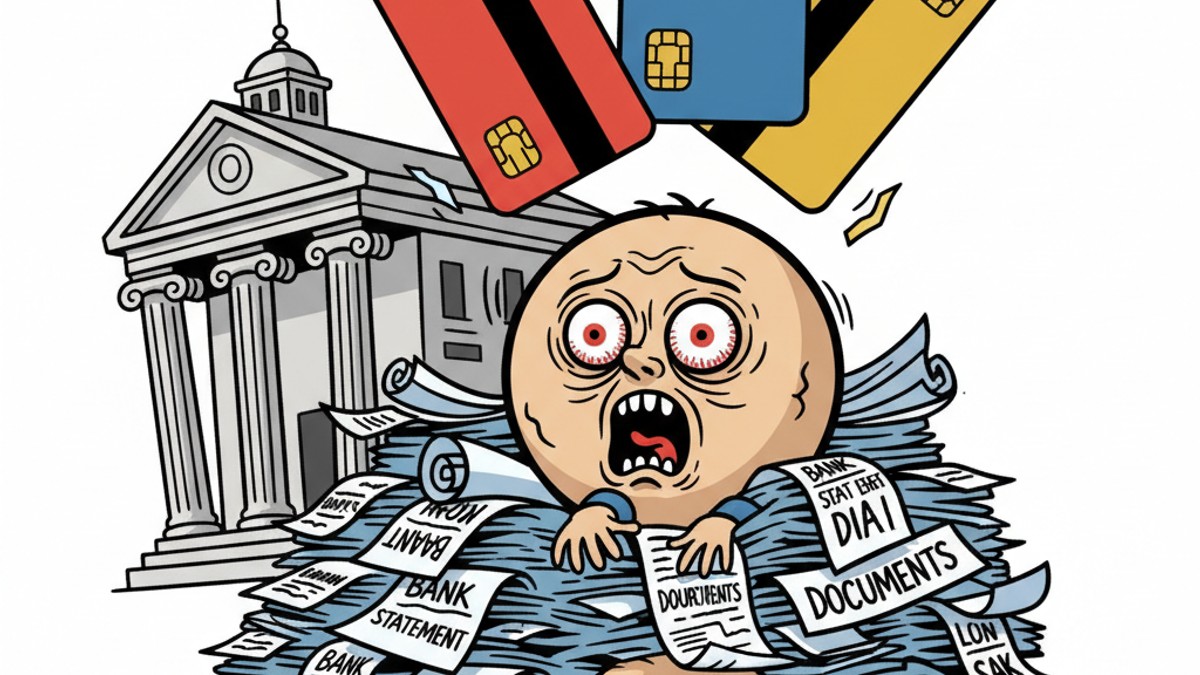
Picture this: you’re at the bank negotiating a mortgage, and the clerk tells you — “to get the loan approved, you must transfer your salary here and take our insurance.” Sounds familiar? As of November 20, 2026, they won’t be able to do that anymore.
The Croatian Parliament passed the new Consumer Credit Act on July 15, 2026 (published in the Official Gazette “Narodne novine”), merging two existing laws and transposing EU Directive CCD 2 into Croatian legislation. The result? 17 concrete changes that will affect your wallet.
📅 When Do the Changes Take Effect?
The law is being introduced in three phases:
| Phase | Date | What Changes |
|---|---|---|
| 1 | November 20, 2026 | Main rules — overdrafts, loans, advertising, creditworthiness assessment |
| 2 | June 1, 2027 | Licensing requirement for previously unregulated lenders (retailers, telecoms) |
| 3 | January 1, 2028 | Rules for card installment payments and BNPL |
🔟 The 17 Key Changes
1. No more unilateral overdraft increases
The lender cannot unilaterally introduce or increase an authorized or unauthorized overdraft on your current account. The same applies to credit cards. Any increase requires your explicit consent.
2. Interest-free and short-term loans under scrutiny
Protection extends to interest-free loans, loans repayable within 3 months with a fee up to €3.98, and authorized overdrafts. The previous upper limit of €132,722.81 is abolished.
3. Loan ads must carry a warning
Every ad must feature a clearly visible message: “Caution! Borrowing is not free.” Standardized comparison information is also mandatory.
4. Misleading advertising banned
It is prohibited to suggest that a loan improves your financial situation, replaces savings, or raises your standard of living. Mentioning payment deferrals longer than 3 months as a reason to take out a loan is also banned.
5. End of hidden checkboxes
The lender cannot assume consent through pre-checked boxes. Loan approval or additional services require your explicit request.
6. Stricter creditworthiness assessment
The bank may only approve a loan if the assessment shows you can repay it. The assessment cannot be based solely on credit history. Social media data and health data — explicitly prohibited.
7. AI doesn’t decide alone
If the assessment is based on automated processing, you have the right to human review, an explanation of the logic, and the right to challenge a rejection.
8. Right to be forgotten for cancer survivors
After 10 years from the end of treatment, insurers cannot use cancer diagnosis data for insurance policies linked to loans.
9. Free choice of insurance
Lenders cannot condition a loan on purchasing their own insurance policy. If they require insurance, they must accept a policy from another insurer offering the same level of coverage. You have at least 3 days to compare offers.
10. Banks can’t force you to transfer your salary
Tying practices are banned — banks cannot require you to transfer your current account or salary as a condition for loan approval. They can still offer a better rate as a clearly stated benefit, with 15 days’ notice before any termination.
11. Stronger right of withdrawal
You have 14 days to withdraw without stating a reason. If you didn’t receive all contract terms — the period extends to 12 months and 14 days. If you weren’t informed of the withdrawal right at all — no time limit applies.
12. Cheaper early repayment
For early repayment, you’re entitled to a proportional reduction in total costs. Compensation is capped:
- max 1% of the repaid amount if >1 year until maturity
- max 0.5% if <1 year remains
- Compensation applies only if you repay over €10,000 in 12 months (and only on the portion above that amount)
- For mortgages — no early repayment fee at all
13. Free repayment if rates go up
If the bank raises a variable interest rate, you have 3 months to repay the consumer loan early with no fee.
14. No mortgage processing fees
Charging fees for processing and approving mortgage loans is prohibited.
15. Interest rate caps maintained
The effective interest rate on consumer loans cannot exceed the statutory default interest rate + 2 percentage points. For mortgages — the statutory default interest rate level.
16. FINA introduces free debt counseling
If you’re having trouble repaying, the lender must refer you to independent debt counseling provided by FINA free of charge. This includes financial analysis, help communicating with creditors, and advice on debt restructuring.
17. Annual loan statement
The lender must send you a free loan status statement at least once a year, by March 31 at the latest. This also applies to co-debtors and guarantors.
🏦 CNB Takes Over Supervision
The Croatian National Bank (CNB/HNB) becomes the central supervisory authority for all lenders and credit intermediaries. Banks, credit unions, and regulated financial institutions continue operating under existing authorizations, while new providers (retailers, telecoms) must obtain a license by August 1, 2027.
HANFA retains supervision over leasing companies, insurers, and other entities under its jurisdiction.
💡 What This Means for You
Consumers are the biggest winners. If you’ve ever felt like the bank had you “by the short hairs” with overdrafts, credit cards, and tied insurance — this law gives you back your bargaining power.
- ✅ Don’t want to transfer your salary? You don’t have to.
- ✅ Have your own insurance? The bank must accept it.
- ✅ Bank raised the rate? You have 3 months to exit for free.
- ✅ Beat cancer? After 10 years — data deletion.
- ✅ Struggling with repayment? FINA offers free counseling.
⚠️ What Stays the Same?
Installment payments via credit card remain unchanged — for now. New rules for card installments and BNPL come into effect January 1, 2028.
Also, new rules apply to contracts concluded after the law enters into force. Existing loans continue under the old rules.
Timeline of Changes
| Date | What Happens |
|---|---|
| July 15, 2026 | Parliament passes the law |
| July/August 2026 | Published in the Official Gazette |
| November 20, 2026 | Main rules take effect |
| June 1, 2027 | Licensing for retailers and telecoms |
| August 1, 2027 | Deadline for license applications |
| January 1, 2028 | Rules for card installments and BNPL |
👉 Follow Prafin for more guides like this — because forewarned is forearmed.
Sources: Poslovni dnevnik, HRT, Index.hr, Monitor.hr, Večernji list, Mojnovac.hr