
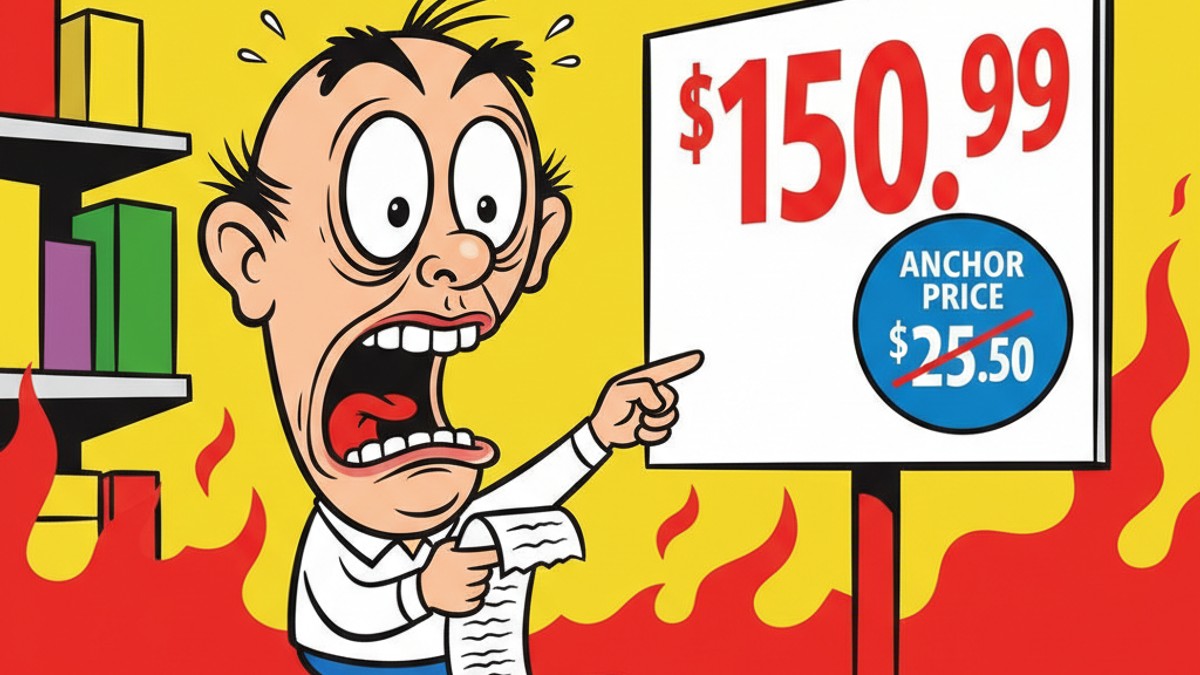
Imagine this: October 1st, you walk into your favorite store. The price tag says €2.99. Next to it, in small print: “Reference price: €2.49”. Suddenly, you know — it went up. No guessing.
This isn’t a theory. From October 1, 2026, every retailer in Croatia must display the so-called anchor price next to every product and service. And if they have a website, they must publish a full price list in digital format. Every day. By 8 AM.
The government adopted these measures at its September 10 session, published in the Official Gazette 101/2026. This isn’t a recommendation. It’s an obligation enforced by inspections. And it affects every single consumer.
Here’s what exactly changes, what you need to watch out for, and — more importantly — how to use it.
What is an anchor price and why does it matter?
An anchor price is the price that the same product had on a specific reference date. The goal: to let you see if the price went up or down.
Until now, the obligation to display anchor prices applied only to food, beverages, cosmetics, cleaning products, toiletries, and household items. For those products, the reference price is the one from May 2, 2025.
From October 1, the obligation expands to ALL products and services in retail. For everything not covered by the previous decision, the reference price is the one that applied on September 10, 2026.
Example: you buy a vacuum cleaner that cost €150 on September 10. On October 1, you see the same vacuum at €179. Next to the price it says “Anchor price: €150”. You immediately know: it went up ~19%. Without that information — you wouldn’t know.
Mandatory online price lists — what changes?
This might be the bigger news. All retailers and service providers with a website must publish a complete price list on it.
Digital format .xml or .csv — not a PDF you have to manually search through. Machine-readable.
Price list must be updated:
- For products — every day by 8:00 AM for the current workday
- For services — with every change, by 8:00 AM on the day of the change
The price list must remain accessible for 30 days from publication.
What must the price list include?
For products: name, code, brand, unit of measure and unit price, retail price + whether it’s under a special form of sale (promotion, clearance etc.), anchor price, barcode, availability (available/unavailable).
For services: service name, retail price + special sale info, anchor price.
Retailers must also enable automated data collection — software tools and bots that compare prices. In other words: they can’t block price comparison sites.
Deadline and who it affects
Everything above takes effect October 1, 2026.
The obligation to publish price lists online applies to retailers and service providers with a website. No website? No obligation. Have one? You must comply.
Exceptions? None. The decision applies to everyone — from Konzum to the corner grocery store, from Hrvatski Telekom to your local barber.
Why this matters to you
- Transparency — no more needing to remember prices. The anchor price does the work for you.
- Comparability — XML/CSV price lists let comparison services have accurate data. You’ll be able to compare prices without going to the store.
- Protection from inflation fog — in times when prices rise faster than wages, the anchor price is the only way to see the real change.
What if a retailer doesn’t comply?
The decision is based on the Act on Exceptional Price Control Measures (NN 40/2025). Inspections can impose fines — from €660 for violations up to several thousand euros for larger retailers.
If you notice a retailer not displaying an anchor price or not publishing a price list — report them to the State Inspectorate. It’s your right.
What stays the same?
For food, beverages, cosmetics, cleaning products, and household items — the reference price remains that of May 2, 2025.
If a retailer has no website — no need to publish online. But the anchor price must be displayed at the point of sale, on flyers, posters, and digital advertising on premises.
Quick consumer guide — what you can do today
- Mark October 1 on your calendar — a new era of price transparency begins
- Track the prices of your regular purchases — now you can compare them with the anchor price
- If there’s no anchor price — ask why. And report it if needed.
- Use XML price lists — price comparison apps will become much more useful
This article is based on the Decision on Publication of Product and Service Price Lists (NN 101/2026, 11.9.2026) adopted by the Government of Croatia at its session on September 10, 2026. We’ll monitor implementation and report if inspections start issuing fines.