
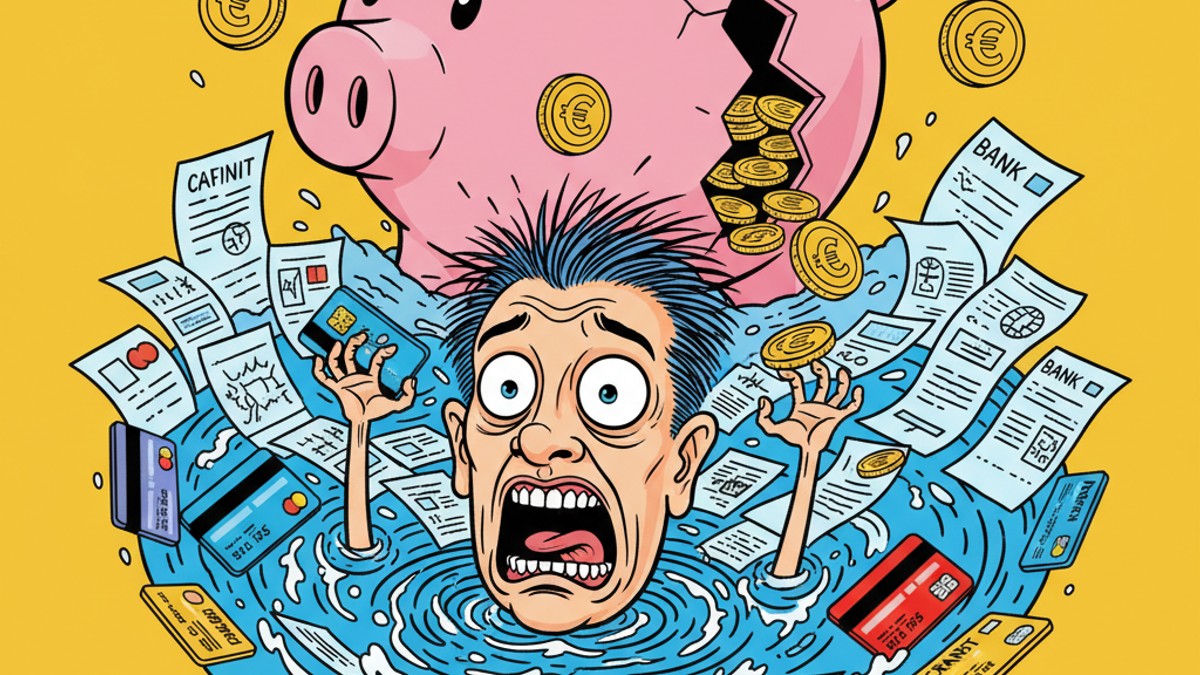
The Croatian Parliament passed a completely new Consumer Credit Act on July 15, 2026, with 131 votes in favor. This is the biggest reform of consumer lending in the last decade — the law consolidates the existing Consumer Credit Act and the Housing Consumer Credit Act into a single piece of legislation, transposing the EU CCD 2 directive into Croatian law. Most provisions take effect on November 20, 2026, while some rules for merchants and installment card payments won’t apply until 2027 and 2028. Here’s a complete overview — what’s changing, when, and how it affects your wallet.
1. Banks can no longer unilaterally increase your overdraft
This is probably the most important change for the general public. A creditor (bank) cannot unilaterally introduce or increase an authorized overdraft on your current account. The same applies to the available amount on your credit card. Any increase requires your explicit consent. No more emails saying “we’ve increased your overdraft to €5,000” without you asking for it.
2. Small loans and short-term borrowing — now under scrutiny
Protection extends to interest-free and fee-free loans, short-term loans (up to three months) with a maximum fee of €3.98, and authorized overdrafts. The previous upper application limit of €132,722.81 has been removed. For the smallest loans (under €200), simplified information obligations apply.
Important: Installment payments via credit/debit cards and “buy now, pay later” models fall under the new rules only from January 1, 2028.
3. Mandatory warning in every ad: “Caution! Borrowing is not free”
Every credit ad must contain a clearly visible message: “Caution! Borrowing is not free.” If an interest rate or any cost information is mentioned, standardized comparison information must also be included. Additionally, misleading messages are banned — ads cannot suggest that credit improves your financial situation, replaces savings, or raises your standard of living.
4. End of pre-checked boxes and unsolicited credit
Creditors cannot assume consent through pre-checked boxes. They cannot approve a credit or additional service without your explicit request. Every consent must be clear and voluntary.
5. Stricter creditworthiness assessment — AI doesn’t decide alone
A bank may approve credit only if the assessment shows you can reasonably repay it. It cannot base the assessment solely on your credit history, and social media data is explicitly prohibited. If automated processing (AI) is used, you have the right to a human review, an explanation of the logic used, and the right to challenge a rejection.
6. Right to be forgotten for former cancer patients
For insurance policies linked to credit, insurers cannot use data about a cancer diagnosis after 10 years have passed since treatment ended. This important measure ensures equal access to credit and insurance for people who have survived cancer.
7. Free choice of insurance
Banks cannot require you to buy their own insurance policy as a condition for credit. If they require insurance, they must accept a policy from another insurer that provides equivalent coverage. You get at least three days to compare offers.
8. Banks cannot force you to transfer your salary
Linking practices are banned — a bank cannot make credit approval conditional on transferring your current account or salary. They can still offer a better rate to those who transfer their income, but only as a clearly stated benefit, and they must notify you at least 15 days before canceling it.
9. Early repayment — clearer and cheaper
When repaying early, you’re entitled to a proportional reduction in total credit costs. A fee is only possible for fixed-rate loans and is strictly limited:
- maximum 1% of the amount repaid if more than one year remains until maturity
- maximum 0.5% if less than one year remains
- only charged if you repay more than €10,000 in 12 months, and only on the amount above that threshold
- for housing loans — no early repayment fee at all
10. When credit gets more expensive — repayment without fee
If the bank raises a variable interest rate, you have three months to repay the consumer loan early without any fee.
11. No processing fee for housing loans
Charging fees for processing and approving a housing loan is banned. After concluding the agreement, the bank generally cannot introduce new fees or increase existing ones.
12. Interest rate caps remain
The effective interest rate (EIR) on a consumer loan must not exceed the statutory default interest rate plus two percentage points. For housing loans — the statutory default interest rate level.
13. FINA introduces free debt counseling
If you’re struggling with repayment, the bank must refer you to independent debt counseling provided by FINA free of charge. This is a major innovation — previously you had to go to private counselors or lawyers.
14. Annual credit statement — free
The bank must send you a free credit statement at least once a year, by March 31 at the latest. This also applies to co-debtors and guarantors — they also have the right to this information.
15. Right of withdrawal — 14 days no questions asked
You can withdraw from a credit agreement within 14 days without giving any reason. If you didn’t receive all the contract terms, the deadline extends to 12 months and 14 days. If you weren’t even informed about your withdrawal right — the deadline is unlimited. For housing loans, the bank must give you at least 15 days to consider the binding offer.
16. CNB takes over supervision of credit intermediaries
The Croatian National Bank (CNB) takes over licensing and supervision of creditors and credit intermediaries that were not previously regulated. In other words — no more unlicensed lending. All credit providers must obtain a license by August 1, 2027 at the latest.
17. When does everything take effect?
The law applies in three phases:
- November 20, 2026 — most provisions (most of the changes listed above)
- June 1, 2027 — licensing obligations for previously unregulated providers and creditworthiness assessment for merchants financing their own installments
- January 1, 2028 — rules for card installment payments and “buy now, pay later” models
The law will primarily apply to new contracts concluded after it takes effect. Existing loans remain governed by the old rules, with exceptions such as the effective interest rate calculation and interest rate caps.
What does this mean for you?
If you’re a young person just entering the world of credit — these are good news. The law protects you from aggressive banks, hidden fees, and unfair practices. Banks will have to be more transparent, and your consent will be required for any change in terms.
The Ministry of Finance has specifically emphasized that installment payments via cards remain the same — don’t worry, everyday card installments are not affected by this law.
Sources: Poslovni dnevnik, Ministry of Finance of the Republic of Croatia, Croatian Parliament, Consumer Credit Act (NN, 2026)