
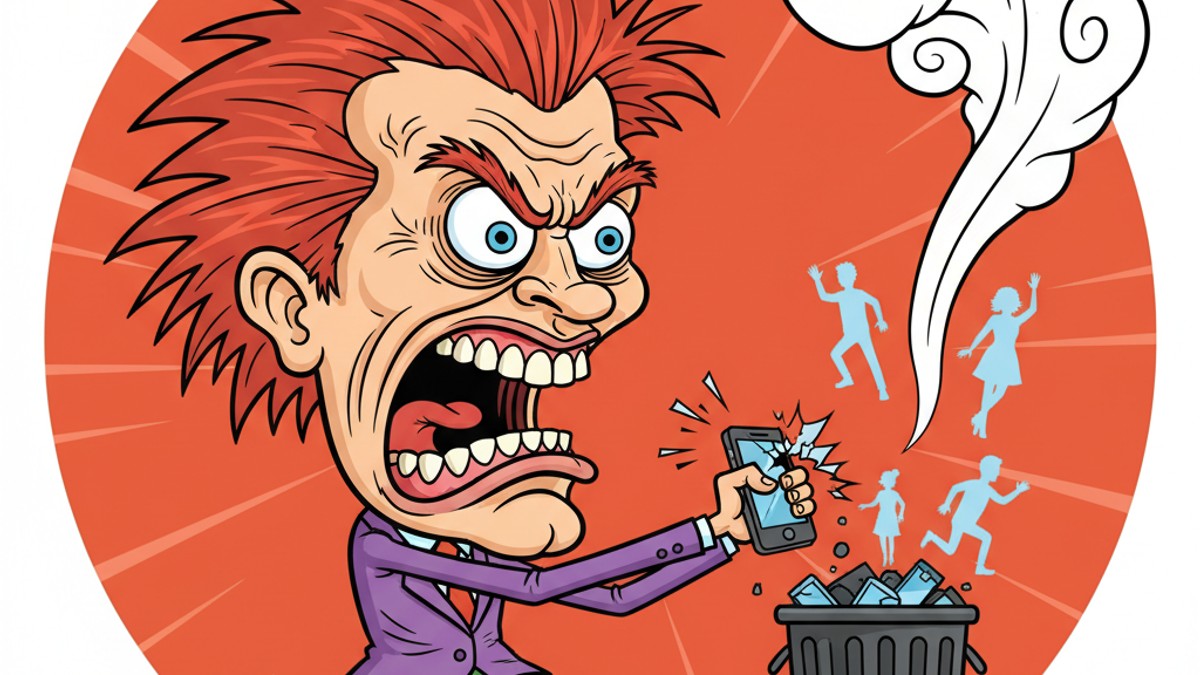
You broke up. Great. Now — how do you remove your ex from your digital life without breaking the law? Spoiler: GDPR gives you more power than you think. 🦊
When a relationship ends, you’re left with a mess of digital leftovers. Shared Netflix, photos on Instagram, Google Maps history, that Spotify playlist “Our Top 100”, and maybe even a joint bank account or apartment under both names.
Here’s a legal and practical guide — step by step — on how to digitally clean the slate and move on. No lingering reviews, no traumatic reminders.
1. GDPR — Your Secret Weapon 🛡️
Article 17 of the GDPR (right to erasure / “right to be forgotten”) says: you have the right to request deletion of your personal data from any organization processing it. Without undue delay.
What does this mean in practice?
- Photos you’re in — if your ex posted a photo of you and you no longer want it online, you have the right to demand its removal. Social networks (Facebook, Instagram, TikTok) have procedures for reporting and removing content under GDPR.
- Your name and data — if you’re mentioned in a post, comment, or blog entry, you can request deletion.
- Shared data on platforms — Google, Apple, Facebook — all have tools for “download my data” and “delete my data”.
⚠️ Important: GDPR doesn’t apply to your personal photos that are on your own phone. If your ex keeps your photos on their device, that’s a different issue — unauthorized access to someone else’s account (Art. 266 of the Croatian Criminal Code) or privacy violation (Art. 147).
2. Social Media — Removal Procedure 📱
Here’s how to handle each major platform:
Facebook / Instagram
If your ex posted your photos or data without consent:
- Go to the post → three dots → Report → “Violates my rights” → “GDPR deletion request”
- Alternatively: fill out the GDPR request form on Facebook’s support page
- The platform must respond within 30 days (Art. 12 GDPR)
TikTok
TikTok has a “Report” → “Privacy concerns” → “I’m in this video and I don’t want to be” option. Handy, right? And still, GDPR gives you the right to request deletion if you’re identifiable.
X (Twitter)
Report the tweet → “It displays personal information” → “My image or video was shared without my consent”. Works faster than you’d think.
3. Shared Accounts — Separation 💔🔐
This is the most practical (and fun) part:
- Netflix — “Sign out of all devices” in account settings. Change password. Ex can’t watch your show anymore.
- Spotify — “Sign out everywhere” → change password. Duo/Family plan: remove the member from the group.
- Amazon Prime — manage “Household” members → remove your ex.
- iCloud / Google Drive — change password, check “Shared albums” and “Shared files”, remove access.
- Joint bank account — this is more serious. Both need to go to the bank in person or with a signed statement. If one party refuses, it requires a court-ordered dissolution of co-ownership.
- Joint apartment — either agreement or court. No shortcuts.
4. Passwords, PINs, and Security 🔑
This is the #1 thing people forget:
- Change passwords — literally everything. Email, social media, banking, PayPal, Revolut, Amazon, Netflix, all of it.
- Change PINs — card, phone, alarm.
- Remove your ex’s fingerprint/face from your phone.
- Check “known devices” on Google and Apple — remove anything you don’t recognize.
- Check apps with access — Facebook, Google, GitHub — see which apps have access to your data and remove ones you don’t use (or that your ex installed).
5. What If Your Ex Refuses to Remove Photos? ⚖️
Then you have serious legal tools:
- Pre-lawsuit warning — a lawyer writes a letter that’s usually enough to make most people take things seriously.
- Police report — if it involves threats, harassment, sharing intimate photos without consent (revenge porn, Art. 144 of the Criminal Code).
- Civil lawsuit — for violation of personality rights (Art. 1046 of the Obligations Act). You can claim damages.
- Special protection — under the Domestic Violence Protection Act, if you were married or in a common-law partnership, digital harassment may be a misdemeanor.
6. Action List — What to Do Today 📋
- Change passwords on all key accounts
- Sign your ex out of all streaming services
- Report photos you don’t want on social media
- Remove access to shared Google/Apple albums and files
- Change the PIN on any bank card your ex knew
- Check “known devices” on Facebook, Google, Instagram
- If you need legal help — contact a lawyer, one warning letter often resolves the issue
7. Legal Deadlines You Should Know ⏰
- GDPR deletion request — platform must respond within 30 days (can extend by 60 in complex cases)
- Police report — no formal deadline, but sooner is better (digital traces can disappear)
- Lawsuit for personality rights violation — 3-year statute of limitations from discovery of damage
- Criminal prosecution — for revenge porn and similar, statute of limitations depends on the crime (6 to 20 years)
Conclusion 🎯
Digital life after a breakup isn’t just about deleting photos and changing passwords — it’s about protecting your rights. GDPR gives you superpowers, but you need to know how to use them. If you’re stuck, a lawyer specializing in digital law and GDPR is your best friend.
Now — change your password, kick your ex off Netflix, and move on. 💪🦊
This article is for informational purposes and does not constitute legal advice. Consult a lawyer for your specific situation.